Den 3 september 2026, torsdag
Gregorius den store påve och kyrkolärare
Mariavall: fest
Läsningar: 1 Kor 3:18-23, Ps 24, Luk 5:1-11
Maria Maxine suffering with Cancer all the sick those nursing and caring for them Pope Leo all clergy young returning to education BVM pray all who mourn hunger
https://youtu.be/Ffks2WZOj7U?si=fd6G1z2aSMOnez93
Länkar:
* Breviar (norsk) - Tidebønnene
* Breviary (english) - The Divine Office
* Brewiarz (polski) - Liturgia Godzin
* Brevijar (hrvatski) - Božanski časoslov
* Brevier (deutsch) - Stundengebet
* Breviaire (français) - Liturgie des Heures
* Breviárium (magyarul) - Az Imaórák Liturgiája
If you are sick or have a loved one who is sick, Let's us this day ask for the intercession of Saint Raphael the Archangel 🌃 Prayer to Archangel Raphael for Healing. Oh glorious Archangel Raphael, healer of the body, mind, and spirit, you who are the medicine of God, I humbly turn to you with a heart filled with compassion for those who suffer. I ask for your gentle guidance and powerful intercession to bring healing to [Mention the person's name or the specific situation]. May your healing touch soothe their pain, restore their strength, and bring comfort to their hearts. Grant them the grace to find peace and hope in this time of need. Amen. All you Holy Angels and Archangels pray for the sick 😔 Our Lady of Lourdes, patroness of healing, pray for us 🌹
For more than 700 years, Catholics have traveled to a tiny stone house in Loreto. The strange part is not just what happened inside those walls. It is how those walls ended up in Italy at all.
There is a house in Italy that should not be there.
Its stones come from a building tradition found in the Holy Land. Its three ancient walls line up with the remains of a house in Nazareth. And according to a tradition more than 700 years old, angels carried it across the sea.
So what exactly is this house?
The story begins in Nazareth.
Christian tradition identifies these walls with the home of the Virgin Mary, connected to the grotto where she lived and where the Angel Gabriel came to her. This was the place where Mary gave God her yes, and where the Word became flesh.
For centuries, Christians honored this holy place.
But in 1291, the Crusaders were driven from the Holy Land, and Christian holy sites faced serious danger. The little house could have been lost forever.
But it wasn't.
According to the ancient tradition, the three walls were carried away from Nazareth by angels and appeared across the sea in Illyria, in the area of modern-day Croatia.
But the journey was not over.
The house crossed the Adriatic and eventually reached Loreto, Italy. During the night of December 9 to 10, 1294, it came to rest where it is still venerated today.
That left one huge question.
Was this really the house from Nazareth?
People questioned it, so the structure was studied. And what researchers found made the story even more difficult to explain.
Archaeological studies found that the three walls of the Holy House fit the perimeter of the Grotto of the Annunciation in Nazareth. The stones are also not typical of the area around Loreto. According to the Pontifical Sanctuary, they are characteristic of Palestinian building methods from the time of Christ.
So if these walls really came from Nazareth, how did they cross the sea?
The ancient tradition says angels carried the house. Another explanation is that Christians physically transported the walls to save them from destruction.
The Church does not require Catholics to believe the miraculous transportation as a matter of faith.
But the tradition has never gone away.
The Vatican still speaks of the ancient tradition that angels transported Mary's house from Nazareth to Loreto. And the house standing there today has been honored for centuries.
Popes have prayed there. Saints have knelt there. Millions of pilgrims have stepped inside those three little walls.
But the greatest mystery of Loreto may not be how the house got to Italy.
It is what happened inside it.
A young woman was asked to trust God without knowing what would happen next.
Mary said yes.
And because of that yes, the history of the world changed forever.
The same God who worked through Mary's surrender is still asking us to trust Him today.
Nothing is impossible with God. ❤️🔥
💬 Do you believe angels really carried the Holy House to Loreto, or do you think Christians transported it themselves?
https://youtu.be/5WPoDTBMMqo?si=dqrvOelQ9TfJU27X
https://youtu.be/_z1i2zy4YX8?si=0xEBOjSR2NGHDdsT
The message is consistent, Pray, repent, confess, convert.
The true story of Sister Agnes has certainly NOT been forgotten, nor ever will.
R.I.P. Sr. Agnes 🕊️🌹🙏🏻🌹🕊️
Fri från cancer
Terje Toftenes – Fri från cancer på naturlig väg
2026-08-22
När filmskaparen Terje Toftenes fick dödsdomen – 2-6 år kvar att leva – vägrade han ge upp. Hans reaktion på cancervården – och inspirationen från filmen ”Cancer & Mikrober” – ledde honom in på en annan väg och till skapandet av de egna filmen ”Fri från cancer”, där han berättar om sin egna naturliga väg till läkning.
Efter en sex månaders lång kur kunde man genom benmärgsbiopsi konstatera att Terje var helt cancerfri.
Se en intervju med honom på almanova.se
TAGGARalternativmedicinCancer
Den 3 september 2026, torsdagGregorius den store påve och kyrkolärare
Mariavall: fest
Läsningar: 1 Kor 3:18-23, Ps 24, Luk 5:1-11
Maria Maxine suffering with Cancer all the sick those nursing and caring for them Pope Leo all clergy young returning to education BVM pray all who mourn hungerhttps://youtu.be/Ffks2WZOj7U?si=fd6G1z2aSMOnez93
Länkar:
* Breviar (norsk) - Tidebønnene
* Breviary (english) - The Divine Office
* Brewiarz (polski) - Liturgia Godzin
* Brevijar (hrvatski) - Božanski časoslov
* Brevier (deutsch) - Stundengebet
* Breviaire (français) - Liturgie des Heures
* Breviárium (magyarul) - Az Imaórák Liturgiája
If you are sick or have a loved one who is sick, Let's us this day ask for the intercession of Saint Raphael the Archangel
Prayer to Archangel Raphael for Healing. Oh glorious Archangel Raphael, healer of the body, mind, and spirit, you who are the medicine of God, I humbly turn to you with a heart filled with compassion for those who suffer. I ask for your gentle guidance and powerful intercession to bring healing to [Mention the person's name or the specific situation]. May your healing touch soothe their pain, restore their strength, and bring comfort to their hearts. Grant them the grace to find peace and hope in this time of need. Amen. All you Holy Angels and Archangels pray for the sick
Our Lady of Lourdes, patroness of healing, pray for us
For more than 700 years, Catholics have traveled to a tiny stone house in Loreto. The strange part is not just what happened inside those walls. It is how those walls ended up in Italy at all. There is a house in Italy that should not be there. Its stones come from a building tradition found in the Holy Land. Its three ancient walls line up with the remains of a house in Nazareth. And according to a tradition more than 700 years old, angels carried it across the sea. So what exactly is this house? The story begins in Nazareth. Christian tradition identifies these walls with the home of the Virgin Mary, connected to the grotto where she lived and where the Angel Gabriel came to her. This was the place where Mary gave God her yes, and where the Word became flesh. For centuries, Christians honored this holy place. But in 1291, the Crusaders were driven from the Holy Land, and Christian holy sites faced serious danger. The little house could have been lost forever. But it wasn't. According to the ancient tradition, the three walls were carried away from Nazareth by angels and appeared across the sea in Illyria, in the area of modern-day Croatia. But the journey was not over. The house crossed the Adriatic and eventually reached Loreto, Italy. During the night of December 9 to 10, 1294, it came to rest where it is still venerated today. That left one huge question. Was this really the house from Nazareth? People questioned it, so the structure was studied. And what researchers found made the story even more difficult to explain. Archaeological studies found that the three walls of the Holy House fit the perimeter of the Grotto of the Annunciation in Nazareth. The stones are also not typical of the area around Loreto. According to the Pontifical Sanctuary, they are characteristic of Palestinian building methods from the time of Christ. So if these walls really came from Nazareth, how did they cross the sea? The ancient tradition says angels carried the house. Another explanation is that Christians physically transported the walls to save them from destruction. The Church does not require Catholics to believe the miraculous transportation as a matter of faith. But the tradition has never gone away. The Vatican still speaks of the ancient tradition that angels transported Mary's house from Nazareth to Loreto. And the house standing there today has been honored for centuries. Popes have prayed there. Saints have knelt there. Millions of pilgrims have stepped inside those three little walls. But the greatest mystery of Loreto may not be how the house got to Italy. It is what happened inside it. A young woman was asked to trust God without knowing what would happen next. Mary said yes. And because of that yes, the history of the world changed forever. The same God who worked through Mary's surrender is still asking us to trust Him today. Nothing is impossible with God. Do you believe angels really carried the Holy House to Loreto, or do you think Christians transported it themselves?
https://youtu.be/5WPoDTBMMqo?si=dqrvOelQ9TfJU27X
https://youtu.be/_z1i2zy4YX8?si=0xEBOjSR2NGHDdsT
The message is consistent, Pray, repent, confess, convert.
The true story of Sister Agnes has certainly NOT been forgotten, nor ever will. R.I.P. Sr. Agnes ️
️
Terje Toftenes – Fri från cancer på naturlig väg
2026-08-22
När filmskaparen Terje Toftenes fick dödsdomen – 2-6 år kvar att leva – vägrade han ge upp. Hans reaktion på cancervården – och inspirationen från filmen ”Cancer & Mikrober” – ledde honom in på en annan väg och till skapandet av de egna filmen ”Fri från cancer”, där han berättar om sin egna naturliga väg till läkning.
Efter en sex månaders lång kur kunde man genom benmärgsbiopsi konstatera att Terje var helt cancerfri.
Se en intervju med honom på almanova.se
🌹🙏 The Secret Strength Hidden in the 7 Sorrows of Mary We often assume that deep sorrow shrinks the soul. We run from heartache, numb our grief, or secretly treat our pain as a failure of faith. But gazing at Our Lady reveals something completely counterintuitive. 💖 Her sorrows did not make her brittle. They made her boundless. Every wound carved a deeper sanctuary in her soul, not to trap sorrow, but to hold more of God’s redeeming love. 1. The Prophecy of Simeon 🕊️ Every mother wants a promise of safety for her child, but Mary received the promise of a sword. Instead of shutting down her heart in self-defense, she chose to keep it completely undefended for thirty-three years. 2. The Flight into Egypt 🌙 God did not send a legion of angels to carry them on golden clouds. He asked a young mother to pack in the dead of night and run into the desert dust. True holiness often looks like walking through the dark with nothing but trust as your lantern. 3. The Three Days Loss in the Temple 🕯️ Mary lived through what every searching soul experiences: the agonizing silence of feeling distant from God. Even the Mother of God tasted the ache of seeking without immediately finding. 4. Meeting on the Road to Calvary 🥀 Their eyes met in the middle of chaos. She could not take the heavy wood from His shoulders, so she carried it with her gaze. Sometimes the greatest act of love is simply refusing to look away from someone in pain. 5. Standing Beneath the Cross ✝️ Scripture notes that she stood. She did not collapse into despair or look for someone to curse. Her grief was not defeat, it was a royal posture of quiet fidelity beside the King of Love. 6. The Piercing and the Descent 🤍 The sacred circle was complete. The hands that first wrapped Him in swaddling clothes now received His wounded form. Love stays present until the very end, long after words run out. 7. The Tomb in the Garden ✨ She watched the stone roll shut. While the world believed love had been buried forever, Mary became the living heartbeat of hope, quietly awaiting the dawn. Our Lady reminds us that a wounded heart is never a ruined heart. In God’s hands, every sorrow becomes an open door where mercy pours into the world.🌹🙏
8 böner som bär dig genom dagen, oavsett hur tröttsamt det kan vara
Benediktinerordens motto "Ora et labora" ("Be och arbeta") bör inte bara gälla personer som är vigda till livet, utan även alla katoliker, oavsett klass, särskilt de som är anställda
Bitno.net
 Foto: Shutterstock.com
Jag har nyligen börjat arbeta och för första gången kände jag vad det innebär att vara en arbetande mamma. Jag kan säga att det inte är lätt att balansera mellan de olika arbetsuppgifter jag har och de som väntar när jag kommer hem. Alla dessa skyldigheter kan få en kvinna att explodera och börja skrika: "Serenity now!" Om du är ett fan av Seinfeld-serien vet du vad jag menar. Missförstå mig inte, jag älskar mitt jobb och jag älskar verkligen att vara fru och mamma, men mellan försäljningsrapporter, städning av huset, mejl, volontärarbete på mina barns skola, matlagning, telefonsamtal osv., insåg jag att det är svårt att leva i nuet och inte tänka på nästa åtagande man måste göra. Jag märkte att mitt böneliv led eftersom jag alltid tänkte på de skyldigheter som väntade mig senare under bönen. Det är inte lätt att försöka vara i tystnad med Herren och tänka på sådana saker.
Det var tydligt att mina prioriteringar inte var väl organiserade. Jag försökte klämma in bön i mitt hektiska schema – istället för att bönen skulle vara centrum kring vilket jag byggde alla mina andra åtaganden. Enkelt uttryckt levde jag inte det liturgiska livet och jag led på grund av det.
Jag började leta efter böner som jag kunde inkludera i min dag för att hålla fokus på Herren. Min bönelista växer ständigt, så om du har förslag, tveka inte att lägga till dem på listan:
1. Börja din dag med: "God morgon, himmelske Fader"
Att överlämna sig till Herren är ett underbart sätt att börja sin dag. För att börja dagen i ödmjukhet i hjärtat, efter att jag vaknat, ber jag "Angelus" och denna bön:
"Tack, käre Herre,
för att du vaktade och skyddade mig under natten
och för att du gav mig en ny dag.
God morgon, min himmelske Fader,
tack för solens himmelska prakt.
Tack för hälsan du har gett mig så att jag kan utföra mina plikter idag.
Jag kommer att ägna timmarna av denna vackra dag åt Dig,
och hedra Ditt allra heligaste namn i allt jag gör.
Jag kommer att utföra alla mina dagliga sysslor utan klagomål eller rädsla
och jag ska försöka vara artig och ärlig mot alla.
Jag vet att det fanns dagar då jag avvek från Dig,
så jag ska göra mitt bästa för att ägna denna dag helt åt Dig.
Därför vill jag i början av denna dag säga till er än en gång:
God morgon, min himmelske Fader.
Lita på mig
för jag vill hedra dig i all evighet.
Amen."
2. Under bilkörning eller resa: Rosenkrans

Jag vet att det inte är en vanlig plats och tid att be rosenkransen, men att be rosenkransen medan man kör bil eller reser är en underbar sak (bara be inte med slutna ögon). Istället för att fylla huvudet med en massa meningslösa musikhits börjar du arbetsdagen med viktiga händelser från den Heliga Skriften genom att be rosenkransen. Dessutom lugnar det dig så att du inte blir irriterad i början av dagen på grund av trafikstockningen du kan ha hamnat i.
3. När du kommer till din arbetsplats: "Bön för framgång"
Jag hörde först talas om denna bön när jag var på en försäljningskonferens. Det kändes passande för mig att be den när jag sätter mig på min arbetsplats. Det är bara fantastiskt. Min favoritdel är "hjälp mig göra mitt bästa och låt mig inte förakta den ansträngning det krävs för att uppnå det". Detta är bönens ord:
"Allsmäktige Gud, vars händer styr allt som lever
, ge mig nåden att lyckas i mitt arbete idag.
Hjälp mig så att jag kan styra mina tankar
och behålla uppmärksamheten i det jag gör för att nå framgång.
Vaka över mig och vägled mina handlingar
så att jag inte förstör deras perfektion.
Visa mig hur jag kan göra mitt
bästa och låt mig inte förakta den ansträngning det krävs för att uppnå det.
Gör mitt liv framgångsrikt,
så att
jag i varje plikt du anförtror mig kan göra gott.
Välsigna mig med din hjälp och vägledning
och skydda mig från att misslyckas
i Jesu namn.
Amen."
4. Under dagen: "Herrens Angelus"
Förmodligen är de flesta av er bekanta med denna bön och ber den ofta, men om du bara nyligen blivit katolik tror jag att denna bön kommer att förändra ditt liv. Angelus är en bön som har inkarnationens mysterium i centrum. Han ber tre gånger om dagen: på morgonen klockan 6, vid middagstid och på eftermiddagen klockan 18. Detta schema hjälper dig att börja, följa med och avsluta dagen med mysteriet om Jesu Kristi inkarnation.
5. I oroliga stunder: "Bön för inre frid"
Jag ber denna bön i stunder när allt verkar gå åt fel håll eller när jag vill slå näven genom skärmen på min laptop. Det här är orden:
"Gud, ge mig nåden att i frid ta emot
det jag inte kan påverka, modet att förändra det som kan förändras,
och gåvan av visdom så att jag kan
skilja det goda från det dåliga.
Ge mig nåden att kunna leva en dag i taget,
njuta av varje ögonblick och
acceptera de svårigheter jag möter som en väg till frid.
Att acceptera, likt Jesus
, denna syndiga värld som den är,
inte som jag skulle vilja att den var,
i tron att det ligger i Din makt att styra allt mot det goda.
Jag underkastar mig Din vilja,
så att jag kan bli lycklig i detta liv
och uppnå evig lycka med Dig i himlen.
Amen."
6. För att hjälpa till att erkänna ett misstag: "Bön för ödmjukhet"
Inget kan vara så frustrerande för en perfektionist som när hans plan går åt fel håll. I affärer vet jag hur man organiserar saker och jag är stolt över min precision och konsekvens. Ibland händer det att jag gör ett misstag och min perfekta plan visar sig vara inte så perfekt. Det är svårt för mig att erkänna att jag gjorde ett misstag och jag försöker ofta lägga skulden på någon annan. I de stunderna blev "bön för ödmjukhet" mitt stöd som skyddar mig från min egen stolthet. Det här är hennes ord:
"Jesus, mild och ödmjuk i hjärtat, hör mig!
Från viljan att vara magnifik, befria mig, Jesus!
Att vilja bli älskad...
Att vilja bli hedrad...
Från önskan att bli firad, ...
Att vilja vara den första...
Från viljan att be mig om råd, ...
Från önskan att bli prisad, ...
Att vilja bli berömd...
Av rädsla för att bli förödmjukad...
Av rädsla för att bli föraktad...
Av rädsla för smärtan av klander, ...
Av rädsla för att bli förtalad...
Av rädsla för att bli bortglömd...
Av rädsla för att ha fel...
Av rädsla för att bli skrattad åt...
Av rädsla för att bli misstänksam...
Så att andra må älskas mer än jag är, Jesus, ge mig nåden att önska det!
Att andra kan respekteras mer än jag är, ...
Att bli utvald och jag att bli lämnad åt sidan, ...
Ja, enligt världens åsikt måste andra växa, och jag som jag måste minska, ...
Att andra har företräde framför mig i allt, ...
Så att andra må bli heligare än jag, och att jag kan vara helig så mycket som Du önskar, ..."
7. Bön i slutet av dagen
"Evige Fader,
jag vill vila denna natt i Ditt Hjärta.
Jag visar dig varje hjärtslag,
med all min kärlek jag bär för dig.
Även om jag nu ska vila,
ber jag för omvändelsen av de själar som har förolämpat dig.
Jag ber dig att visa barmhärtighet mot hela världen,
särskilt mot dem som har lärt känna Dig och inte ge upp synden.
Jag erbjuder Dig hela mitt väsen och varje hjärtslag
som gottgörelse för de synder som begåtts.
Amen."
8. Bön till Sankt Josef, arbetarnas skyddshelgon
Slutligen skulle jag rekommendera bön till St. Josef, arbetarnas skyddshelgon. Ingen lista med böner relaterade till arbete kan passera utan den. Om vi börjar se på vårt arbete med troens ögon tror jag att vi kommer att utföra våra dagliga arbetsuppgifter mycket bättre och med bättre kvalitet.
"Sankt Josef, med dina händers arbete och
svetten från din panna
närde du Jesus och Maria.
Du som hade Guds Son som din medarbetare,
lär mig att arbeta som du gjorde,
med tålamod och uthållighet,
för Gud och för alla dem som Gud har anförtrott mig.
Lär mig att se i mina medarbetare
Kristus som bor i dem,
så att jag alltid kan vara nådig och
bära dem i kärlek.
Hjälp mig att se på mitt arbete
med trons ögon,
så att jag kan känna
igen Guds skapande plan och
Kristi frälsningsverk i det.
När mitt arbete är roligt och produktivt,
påminn mig om att komma ihåg att tacka dig.
När mitt arbete är svårt,
lär mig att offra det till Gud
som gottgörelse för mina synder
och hela världens synder.
Amen."
Källa: www.stpeterslist.com
A few weeks ago, I visited a church in the Midlands called Harpswell. They have some pre-Reformation church pews which were well worth the visit but they also had a detached bench end which features a depiction of the Five Wounds of Jesus. I decided to look into this devotion a bit more, but in doing this I realise I have bitten off more than I can chew! So this is going to be a rather brief look at it.
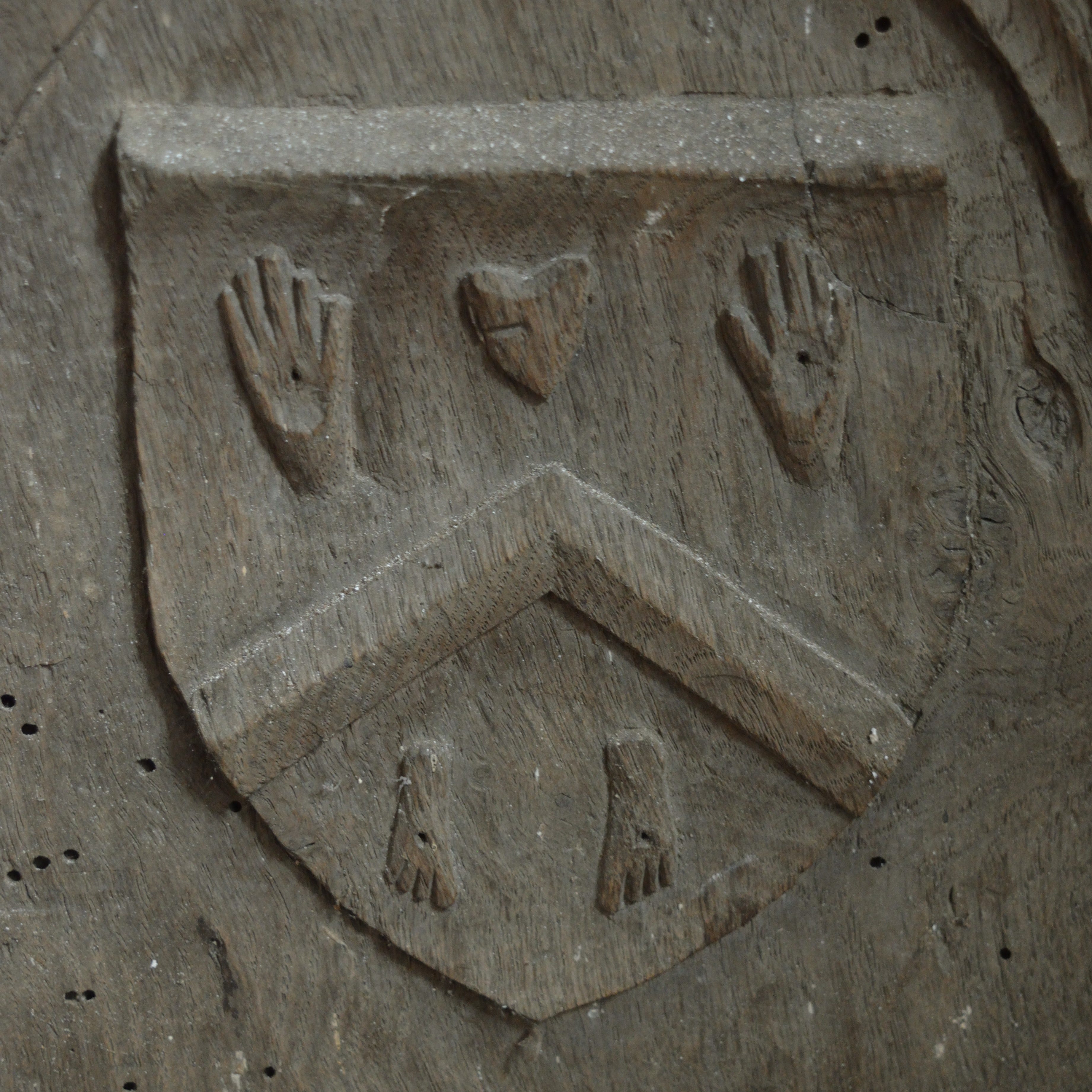
The Five Wounds was a popular medieval devotion and Primers or Books of the Hours all had prayers to the Wounds. It may seem a bit strange to have a picture of disembodied wounds to our eyes, but for medieval people, physical representations of religious realities made them present to them. This was, above all, an aid to prayer.
The Five Wounds are, of course, the ones which Jesus showed to his disciples after the Resurrection, as proof of his rising from the dead. In the Gospel of John, Jesus invites Thomas to put his fingers in the wounds of his hands and feet, and put his hand in his side.
This carving was one of the bench ends in this church, likely made in the late 15th/early 16th century. Here are two of the surviving benches.
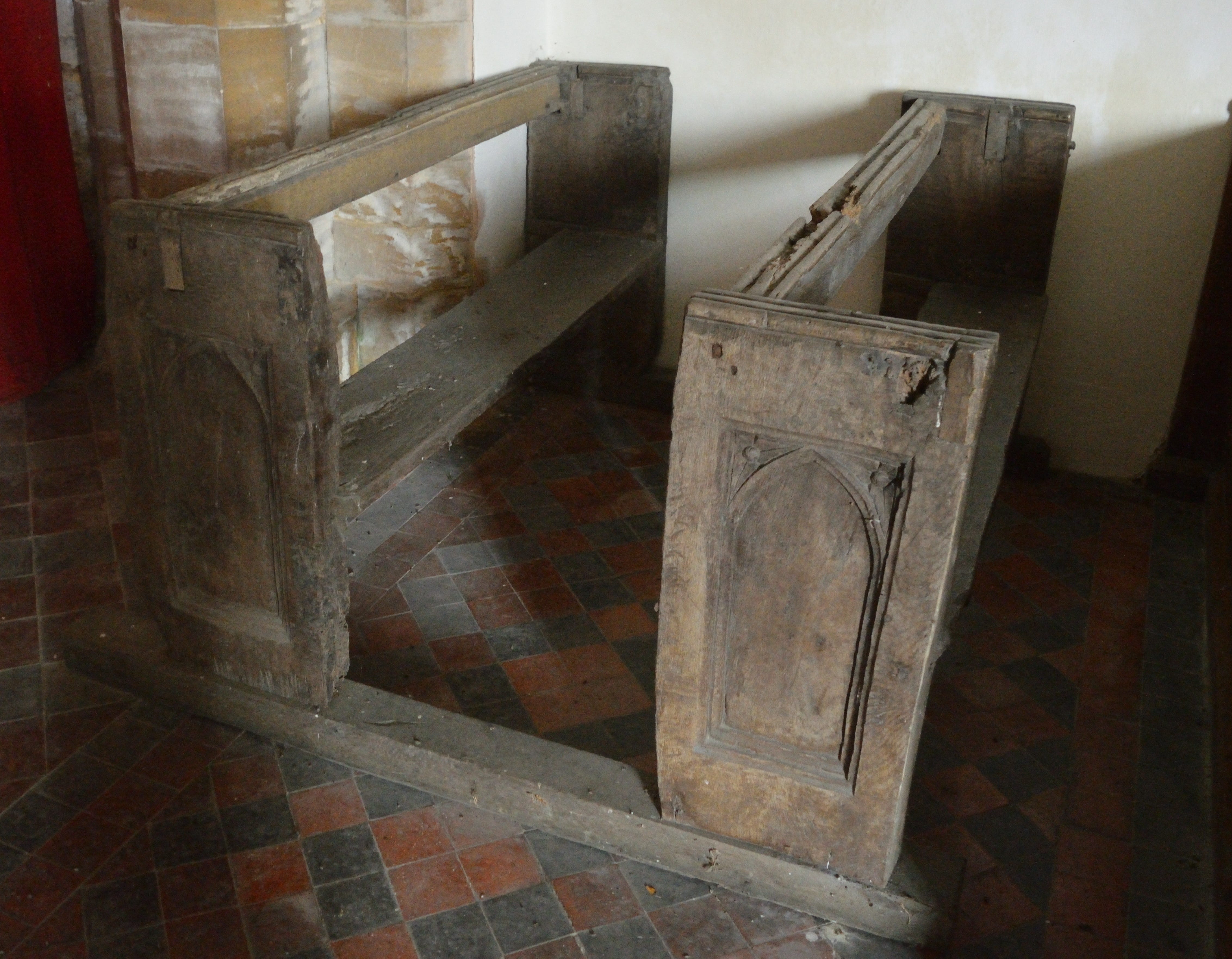
You can see how these bench ends are designed to have a painting in the space at the end and were most likely painted all over. After the Reformation, the paintings, which were presumably of saints, would have been scrubbed off. The Five Wounds Devotion, being an indulgenced prayer and a Mass said especially for the dead, fell out of favour with the new Protestant overlords. This is a carving rather than a painting so could not easily be removed. It could have been chiselled off, but someone, a sympathetic Catholic clinging to their faith presumably, must have taken the decision to detach it and hide it somewhere. Perhaps there was a chapel in this church dedicated to this devotion, perhaps it was just a bench that some local person had paid for and didn’t want to see destroyed, who knows? And so it survived.
https://x.com/FGenteroyJr/status/2095471122347155556?s=20


Kommentarer
Skicka en kommentar